Printing is not a checklist; it’s a discipline. We treat colour, registration and finishing as hard constraints, not preferences. Every job moves through a documented pathway—intake, preflight, proofing, press and finishing—where each stage is measured, signed off and archived. What follows is the doctrine we use to deliver consistent, authority‑grade results.
The Zero-Compromise Promise
Intake & Preflight
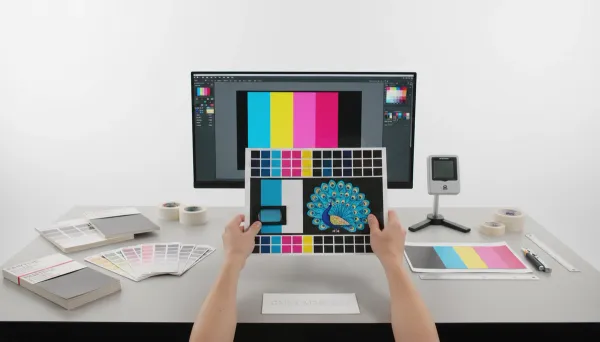
Files arrive via secure channels and enter a controlled intake queue. We verify intent (CMYK vs spot), page count, trim size and bleed. Automated checks flag DPI, embedded colour spaces and transparency; then a human specialist performs a visual scan for overprint conflicts, knockout risks and brand colour anomalies.
| Checkpoint | Standard | Action if Failed |
|---|---|---|
| Bleed | 3mm minimum | Reject & Request New File |
| Resolution | 300 DPI | Flag & Consult Client |
| Safe Zone | 3mm internal | Manual Adjustment (if safe) |
Colour Management
We operate on calibrated devices aligned to FOGRA39/51. Device profiles are reviewed monthly and recalibrated as needed. Brand colours are mapped to press‑safe values and proofed on the target stock where possible. We balance ink limits against paper absorption and coating behaviour so neutrals remain neutral and saturated colours avoid gloss mottling.
Proofing & Sign‑off
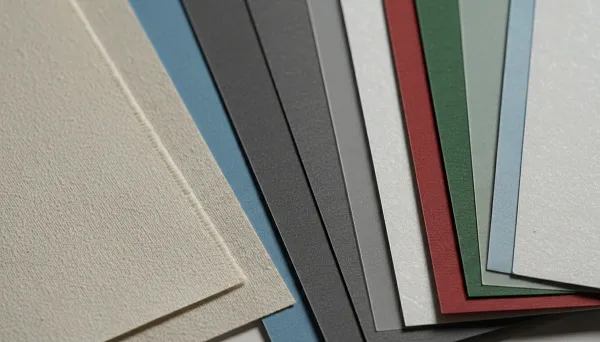
Critical work receives contract proofs with controlled lighting (D50). We annotate potential risks—fine hairlines, reversed type on textured stocks, and foil/UV registration tolerances—so decisions are made with eyes open. Only after client sign‑off does the job pass the gate. Internal sign‑off is separate and mandatory.
Press Setup & Registration
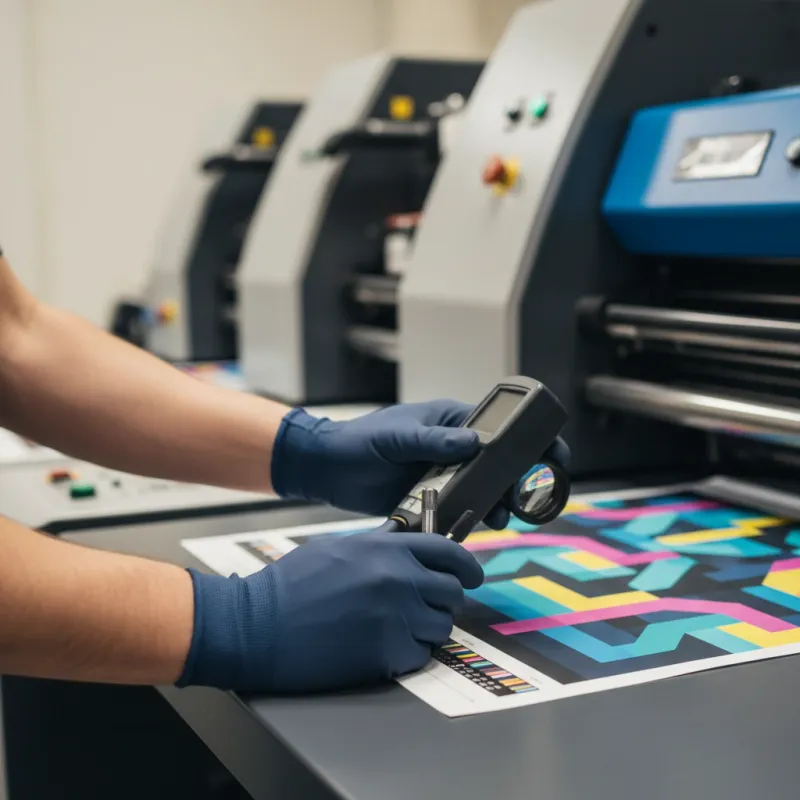
On press, we stabilise the run before production: paper acclimatisation, ink density ramp, registration to within tolerance, and test panels for coverage uniformity. Operators use checklists: grain direction, ink load by zone, and substrate behaviour under speed. We treat make‑ready as a scientific process, not a race.
Finishing Discipline
Finishing must enhance usability, not just aesthetics. Lamination type is matched to handling and longevity; Spot UV is trapped and aligned to avoid haloing; foils use proven dies and heat/pressure curves. Bindery checks paginate accuracy, spine integrity and creep compensation. We reject any piece that cracks at the fold or flattens poorly.
Quality Assurance & Documentation
Each job carries a QA record: measured colour patches, registration notes, finishing parameters and sign‑offs. We retain samples and digital logs to support repeatability. Deviations trigger root‑cause analysis; corrective actions are logged and reviewed during production stand‑ups.
Failure Modes We Prevent
- White slivers from missing bleed.
- Colour drift from unmanaged profiles or uncalibrated devices.
- Foil/UV mis‑registration on textured stocks.
- Cracking at folds due to wrong grain or coating choice.
- Transparency artefacts from poorly flattened PDFs.
Continuous Improvement
We measure spoilage, colour delta‑E and finishing rejects as KPIs. Trends inform training, material selection and process updates. Authority is earned by the jobs we don’t let through as much as the ones we ship—quality without compromise is not a slogan. It’s the way the pressroom works.