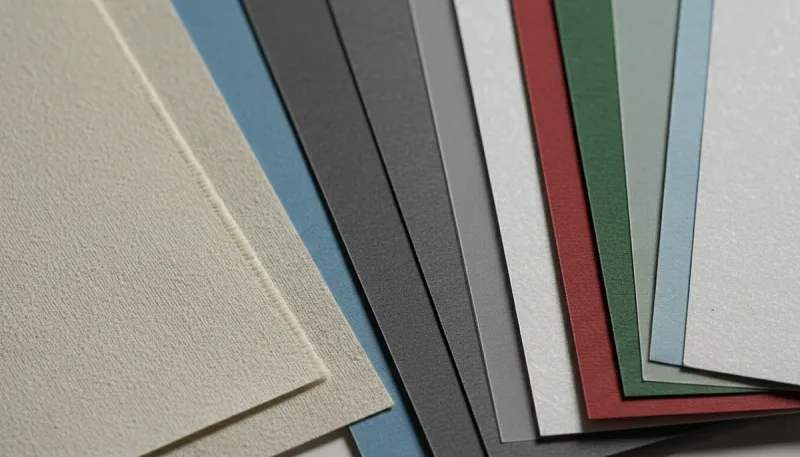
Paper is the foundation of print. It dictates tactile perception, ink absorption, and durability. We don’t just pick "thick" or "thin"—we engineer the stock selection based on fibre orientation, coating chemistry, and end-use environment.
GSM vs. Bulk: Understanding Thickness
GSM (Grams per Square Meter) measures weight, not thickness. Two papers can be 300gsm but have different "bulk" (thickness) depending on how tightly the fibres are pressed. High-bulk stocks feel substantial without the weight penalty.
| Weight Range | Ideal Application | Characteristics |
|---|---|---|
| 80-100 GSM | Letterheads, Forms | Flexible, laser-printer compatible. |
| 130-170 GSM | Flyers, Brochures | Opaque, minimal show-through, folds cleanly. |
| 250-300 GSM | Book Covers, Menus | Rigid, durable, holds lamination well. |
| 350-450 GSM | Business Cards | Premium authority, unbending, luxury feel. |
Coated vs. Uncoated
Coated stocks (Gloss/Silk) have a clay layer that keeps ink on the surface for sharp detail and vibrant colour. Uncoated stocks absorb ink, creating a softer, more organic look but with higher dot gain. We adjust our prepress curves to compensate for this absorption.
Grain Direction & Folding
Paper has a grain, like wood. Folding against the grain causes cracking. We plan layouts so the fold runs with the grain, or we apply a pre-crease (score) to break the fibres cleanly before folding.
Cracking Risk
Environmental Considerations
We source FSC-certified stocks. Recycled papers have improved dramatically, offering high whiteness and smooth surfaces that rival virgin fibre, allowing you to choose sustainability without compromising quality.